 Local Coin Company
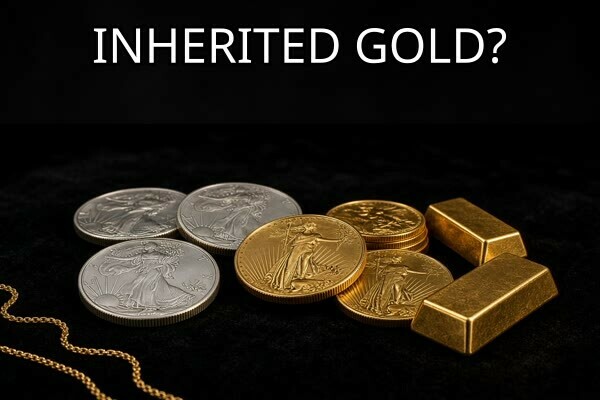
Inherited Gold and Silver: Estate Coins in Tualatin
A relative passes, and suddenly you are holding a cigar box of old coins, a few gold chains, maybe a sealed tube of Silver Eagles. It feels personal and financial at the same time. If you are in Tualatin or anywhere in the Portland metro, you do not have to guess what the stack is worth or rush into a bad sale. This guide walks through a practical order of operations: secure it, sort it, document date-of-death value, then decide whether to keep, insure, or sell.
Local Coin Company buys estate gold, silver, jewelry, and coin collections for immediate cash at 19354 SW Boones Ferry Rd., Tualatin, OR 97062. Shop hours are Monday through Friday 8 AM to 4 PM and Saturday 8 AM to 3 PM. Call 503-855-5255 if you want an appointment before you bring a larger lot.
Step 1: Secure the metals, then make a simple inventory
Start with safety and clarity, not a price quote. Keep the metals in a locked place. Photograph the collection as you found it. Then make a plain inventory sheet: item description, approximate count, any dates or mint marks you can read, and where each piece was stored.
Separate piles as you go:
- Recognizable bullion coins and bars (Eagles, Maples, Krugerrands, branded bars)
- U.S. coin collections and older rolls
- Marked gold or silver jewelry
- Broken or unmarked pieces that may still have melt value
- Sterling flatware or other silver housewares
That sorting step alone can change the offer. Bullion, numismatic coins, and scrap jewelry are priced differently. Our earlier guide on scrap gold vs bullion explains what dealers actually check on karat marks, plating, and investment metal.
Step 2: Understand stepped-up basis (soft-touch tax education)
Under federal rules summarized in IRS Publication 551 (Basis of Assets), property you inherit generally takes a basis equal to fair market value on the date of the decedent's death. If the estate elects alternate valuation for estate-tax purposes, that alternate date can control instead. In plain English: your starting tax basis is usually what the metal was worth when your relative died, not what they originally paid decades earlier.
That step-up can wipe out a lot of paper gain that built up during their lifetime. When you later sell, taxable gain is generally measured from that new basis. The IRS also notes that capital gains on collectibles such as coins can face a maximum federal rate of 28 percent (see IRS Topic no. 409). State tax and other rules may apply. This is education, not advice large estates and mixed assets belong with a CPA or enrolled agent before you liquidate.
Practical tip: keep a dated valuation note near the date of death. Spot charts, a dealer worksheet, photos, and any formal appraisal all help if you sell later and need records.
Step 3: Sort bullion, coins, and jewelry the way a dealer will
Dealers look at purity, weight, recognizability, and condition. Common bullion is often the simplest: weight and purity drive most of the number, with a buy premium or discount versus live spot. Mixed estate jewelry is slower because karat stamps, hollow construction, stones, and plating all matter.
Watch for these categories in Oregon estate boxes:
- Modern bullion: American Gold and Silver Eagles, Canadian Maple Leafs, and similar coins listed on our gold and silver pages
- Older U.S. silver: pre-1965 dimes, quarters, and halves often trade as junk silver by face-value multiples
- Estate jewelry: 10k, 14k, 18k pieces, dental gold, sterling flatware
- Collector coins: key dates, proofs, or graded slabs that may carry numismatic premiums beyond melt
Do not clean coins with polish or abrasives before a visit. Cleaning can erase collector value even when melt value stays the same.
Step 4: Decide keep, insure, or sell and where to sell
You have three honest paths:
- Keep as a family store of value. Document weight and purity, then store securely. See our home-storage guide if you plan to hold metal long term.
- Insure what you keep. A formal appraisal is more useful for insurance than for a same-day cash sale.
- Sell what you do not want to hold. Compare a local cash offer with online options. Shipping, insurance, hold times, and inspection risk matter as much as the headline bid. Our local dealer vs online comparison and how to sell gold and silver in Tualatin walk through those tradeoffs.
At Local Coin Company we buy gold, silver, platinum, palladium, jewelry, diamonds, coin collections, sterling silverware, and dental gold, and we pay immediate cash when the deal is done. Appointments have priority for larger estate lots.
What to bring to a Tualatin estate evaluation
- The metals themselves (or a clear photo inventory first if the lot is huge)
- Any original receipts, slabs, certificates, or estate paperwork you already have
- A short note of the date of death if you are tracking stepped-up basis
- Photo ID for the transaction
You do not need every piece perfectly labeled. A good dealer will weigh, test, and explain the difference between melt, bullion, and collector pricing while you watch.
FAQ
Is inheriting gold taxable income by itself?
Generally, receiving inherited property is not treated as ordinary income the way a paycheck is. Tax questions usually arise later if you sell and realize a gain above your stepped-up basis. Confirm your situation with a tax professional and IRS Publication 551.
Should I melt everything or sell coins as coins?
Not automatically. Recognizable bullion and better-date coins can bring more than raw melt. Mixed scrap jewelry is often melt-driven. Sorting first protects value.
Can I sell only part of an estate collection?
Yes. Many families keep a few sentimental pieces and sell the rest for cash or to rebalance into modern bullion.
Visit Local Coin Company in Tualatin
If you inherited gold or silver in Tualatin, Lake Oswego, Tigard, Beaverton, or greater Portland, bring the lot in during normal trading hours or call ahead. We will help you separate bullion from scrap, explain the offer in plain language, and pay cash when you are ready.
Educational disclaimer: This article is for general information about estate precious metals and publicly available IRS topics. It is not tax, legal, or investment advice. Spot prices move. Rules for estates, gifts, and collectibles can be fact-specific. Consult a qualified tax professional before making decisions based on basis, holding period, or capital-gains treatment.
RETURN <<