 Local Coin Company
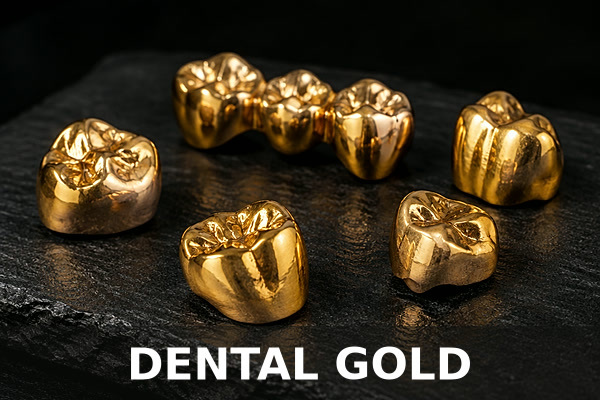
Dental Gold With Gold Near $4,170: What Crowns Hold for Tualatin Sellers
When gold sits near about $4,170 an ounce on our live ticker, old crowns and bridges suddenly look interesting. Families clearing a drawer after a dental visit, or sorting a relative's keepsakes, often ask the same question: what is that yellow metal actually worth?
Dental gold is real scrap gold. It is not the same as the original dental bill, and it is not a bullion coin. Here is how karat and weight set the number, why testing matters, and what Local Coin Company can do if you are selling. This is educational information, not financial, dental or legal advice.
What dental gold is (and is not)
Dentists use gold alloys because they are durable and biocompatible. Those alloys are almost never pure 24-karat gold. Industry selling guides such as APMEX's dental-scrap explainer put most yellow dental restorations somewhere in the rough 10K to 22K range, with many crowns landing nearer the middle of that band. Some pieces are full-cast yellow gold. Others are porcelain-fused-to-metal (PFM) crowns with only a thin precious-metal coping under ceramic.
The Federal Trade Commission's jewelry guidance is a useful yardstick for karat language, even though dental restorations are not jewelry: karat tells you how many parts out of 24 are pure gold. Eighteen-karat is 18 parts gold (75%). Fourteen-karat is 14 parts gold (about 58%). Ten-karat is 10 parts gold (about 42%). A stamp helps when one is present. Many dental pieces carry no consumer karat mark at all, so a stamp is a clue, not a final answer.
The original crown fee paid the dentist and lab for chair time, impressions and fabrication. Once the piece is out of someone's mouth, that retail history drops away. Buyers price recoverable metal.
How melt value is figured
Scrap buyers start from melt math: metal weight after non-metal is set aside, times gold fineness, times a live spot reference, then minus refining cost and the shop's margin. Dental pieces are usually weighed in grams. A single crown often lands in a few grams of alloy; bridges and multi-unit restorations weigh more. Spot gold trades in troy ounces, so shops convert between grams and troy ounces when they quote.
With gold near about $4,170, even a small high-fineness crown can add up. That still does not mean a fixed "per tooth" price. Two crowns that look the same size can hold very different gold content. A fair offer is always lot-specific after testing, not a flat internet number.
U.S. Geological Survey Mineral Commodity Summaries 2026 notes that recycled new and old gold scrap remains a meaningful share of domestic supply, and that dentistry is still a measured industrial use even as that category has softened recently. Scrap is part of the same metal market as bars and coins. It just arrives in smaller, messier pieces.
Why testing beats a visual guess
Color alone is a poor test. Yellow base-metal alloys can look "gold." White dental alloys may hide platinum or palladium. PFM pieces can look mostly ceramic until the metal substructure is checked. Reputable buyers separate porcelain and cement from the metal, weigh the metal portion, and verify fineness before locking a cash number.
That is the same scrap discipline we describe in our guide to what dealers look at in scrap gold. For karat language on jewelry, see our gold hallmarks post and our jewelry versus bullion comparison. Dental lots sit closer to scrap than to a one-ounce Eagle on our gold page.
What we buy, and how buybacks work
Local Coin Company buys gold, silver, platinum, palladium, jewelry, diamonds, coin collections, sterling silverware and dental gold for cash. Dental crowns, bridges, inlays and related scrap belong in that buy list. Bring pieces as they are. Do not try home acid tests that can scar metal or create a mess. Leave porcelain attached unless we ask otherwise; we will sort what matters for the quote.
Buy spreads on small scrap lots are often wider than on recognized one-ounce bullion. That is normal. Testing and refining cost more per dollar on tiny irregular pieces. Our plain-English guide to how coin shops price buybacks covers the categories. Soft-touch prices on the homepage are a snapshot; the counter quote uses today's tested content.
Our take (opinion): treat dental gold as scrap, not nostalgia
In our view, dental gold belongs in the "test it, then decide" bucket. It is not a starter bullion purchase, and it is not a collectible coin. Families clearing estates sometimes toss crowns into a mixed junk drawer or accept a flat "gold teeth" offer that ignores weight and fineness. We think that is backwards. Sort dental metal into its own bag, get it tested, and compare the cash bid to what you actually hold. Sentiment is fine at home. Pricing should stay on metal.
Selling dental gold in Tualatin
Bring pieces sorted if you can, keep them separate from costume jewelry and plated scrap, and skip polishing. Our coin shop visit checklist covers the basics. For storage after you buy metal, see our home storage guide. We are at 19354 SW Boones Ferry Rd., Tualatin, OR 97062. Normal trading hours are Monday through Friday 8 AM to 4 PM and Saturday 8 AM to 3 PM. Appointments have priority, so call 503-855-5255 to schedule.
Sources: APMEX, "How Much Is a Gold Tooth Worth?" (February 17, 2026); Federal Trade Commission consumer guidance on gold karat jewelry markings; U.S. Geological Survey, Mineral Commodity Summaries 2026 (Gold); Kitco AM Report (October 13, 2026); localcoinco.com prices as of October 13, 2026.
RETURN <<